

Can a single platform remember a hybrid body across hundreds of messages and keep your figures true to their archetype? You rely on memory engines and pose locks to hold anatomy details steady. This short guide shows how to stop frequent drift and avoid re-briefing.
In practice, the best tools in 2026 let you set baseline traits and save them. That means fewer interruptions and more fluid storytelling.
Many platforms revert to default female body types when threads get complex. You need a platform that gives users deep access to settings and memory controls for high accuracy.
Follow clear prompts, lock poses, and use specialized tools to keep futanari figures recognizable. By doing so, the creation process becomes smoother and adult content stays stable across your narrative.
Key Takeaways
- Use memory engines to preserve baseline anatomy and archetype details.
- Choose platforms that offer advanced access and pose-lock options.
- Set clear prompts so the process stays accurate with minimal re-briefing.
- Specialized tools help maintain futanari traits across long conversations.
- Good workflow reduces drift and improves creation speed for users.
Understanding the Appeal of Futa Archetypes
The visual power of futanari archetypes comes from blending male and female anatomy into a single, imaginative figure.
You should know that the word futanari comes from Japanese: “futa” (two) + “nari” (form). The modern genre rose in 1990s hentai and mixed female presentation with male genital features.
The charm lies in contrast. These figures let artists merge male female traits and explore non-binary ideas in anime and manga style.
- Design freedom: you can push body shape and features beyond standard binary limits.
- Visual contrast: mixed anatomy creates striking fantasy figures.
- Community interest: many artists and fans value the genre for storytelling range.
| Aspect | Why it Matters | Creative Tip |
|---|---|---|
| History | Roots in folklore and 1990s adult art | Study early works to learn archetypes |
| Body & Shape | Distinct silhouettes attract attention | Balance male female cues for clarity |
| Community | Active artists and critics drive trends | Share drafts and gather feedback |
Mastering Consistent Futa Characters in AI Narratives
Begin with a simple trait sheet so your AI model remembers what matters most about your character. This short setup saves you time and reduces drift during long scenes.
Defining Core Traits
Pick three to five visual and behavioral traits that define the figure. Include body type, voice tone, signature moves, and a short backstory line.
SpicyChat AI hosts over 750,000 entries you can study to find archetypes. Use them as templates, then pare details to a few hard rules the model must follow.
Establishing Personality Baselines
Give the engine a clear emotional range and a few repeatable quirks. Label these as defaults so the model keeps the same voice and reactions across sessions.
Use platforms with memory features—like the Memory Vault on DRT.fm or JOI AI’s Moon model for deep recall and the Mars model for extended explicit runs. These tools help preserve depth and details without constant re-briefing.
- Set core traits first to lock visual and behavioral cues.
- Match model to tone: Moon for memory, Mars for long scenes.
- Fine-tune on a platform that lets users save and edit trait banks.
The Role of Anatomical Vocabulary in Prompting
The right anatomical vocabulary acts like a roadmap for models generating hybrid anatomy. Use clear terms so the model understands the mix of male and female traits you want in a futanari figure.
Stable Diffusion and similar engines use latent diffusion to turn text into images. Their training sets often underrepresent non-binary anatomy, so your word choice matters more than you might expect.
When you craft prompts, balance fantasy language with precise, clinical descriptors. That reduces fused limbs, odd proportions, and other common artifacts in hentai and hybrid art.
- Use targeted anatomical terms to tell the model which parts are hybrid and which follow typical form.
- Refine prompts iteratively—test synonyms and note which yield the best results in your creation process.
- Keep the language compact to avoid triggering filters while still describing the desired content.
Mastering this vocabulary gives you greater control over the final output. With careful phrasing, the model will produce a clearer body and truer fantasy vision for your adult artwork.
Balancing Human and Fantasy Anatomy
A convincing hybrid form depends on clear choices about leg structure, tail flow, and muzzle detail. Pay attention to how each element affects motion and expression so your figure feels alive.
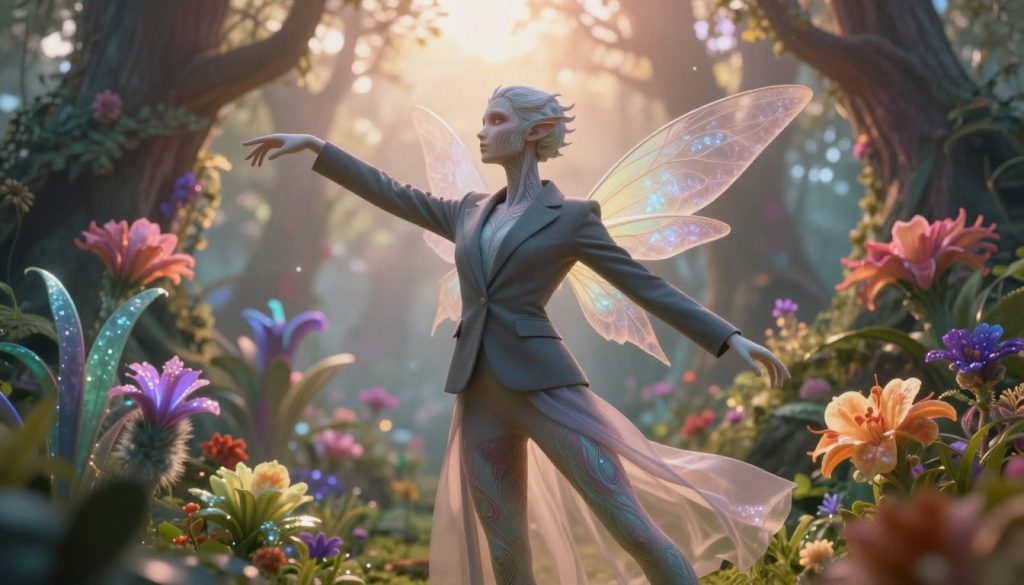
Digitigrade vs Plantigrade Leg Design
Choose leg type to match species logic. Digitigrade legs have two main joints—the knee and the hock—creating a “Z” shape that changes stride and weight distribution.
Plantigrade legs read more human and suit figures that keep a human gait. Pick one and keep proportions steady for accurate movement.
Tail Attachment Mechanics
Treat the tail as a spine extension, not an add-on. Follow the curve of the lower back so the tail flows from the pelvis and complements balance during motion.
This small decision improves anatomical accuracy and strengthens the character’s silhouette in both poses and close-ups.
Muzzle and Facial Expression
Master the muzzle so human emotions translate clearly. In the kemono style, larger eyes and simple muzzles convey warmth and appeal.
Focus on mouth shapes, brow lines, and eye timing to merge male female cues without losing the female body proportions that define your futa character.
“Balance biological rules with stylistic choices to avoid the uncanny valley.”
- Decide leg type early to guide pose and gait.
- Anchor tails to the spine for realistic movement.
- Refine muzzle lines to express human emotion on non-human faces.
Selecting Platforms with Superior Memory Engines
Memory depth is the single feature that separates hobby tools from professional-grade platforms. You want a model that preserves anatomy, backstory, and behavior across sessions so adult roleplay or long-form fan work stays true.
DRT.fm offers a Memory Vault that keeps multi-day narrative continuity for futanari figures without manual re-briefing. That kind of persistence saves time and preserves style.
Candy AI adds 120-second animated clips to give visual continuity, while OurDream AI supports 256-image batches for high-volume image generation. Those features help maintain visual and textual alignment.
“Pick tools with both text memory and visual consistency to avoid interruptions in your workflow.”
Look for platforms with a robust character builder, active community support, and ongoing development. These elements give you access to deep memory, useful tools, and the design flexibility creators need.
Leveraging Pose Locks for Visual Stability
Locking poses gives your art a stable blueprint that survives multiple render passes. Use pose locks to fix limb angles, torso twist, and head tilt so the same character reads identical across scenes.
Using reference images is a best practice. Provide the model a set of shots: front, three-quarter, and profile. That guide helps the engine reproduce hybrid anatomy and signature features reliably.
Using Reference Images for Consistency
Platforms like Pose Studio on DRT.fm give granular control. You can lock a stance and export pose data for later generations.
- Pose locks reduce drift when you iterate on a scene.
- Reference images supply clear visual rules for the model and artists.
- Choose a platform whose engine supports pose export and layered edits.
| Tool | Benefit | When to Use |
|---|---|---|
| Pose Studio (DRT.fm) | Granular pose control, exportable data | Complex scenes and repeated shots |
| Reference Bank | Multiple angles for anatomy and style | Cross-session visual stability |
| Advanced Engine | Respects locked pose metadata | High-detail renders and edits |
“Mastering pose locks is one of the fastest ways to raise the quality of futanari art.”
Managing Cross-Session Narrative Continuity
Narrative continuity requires tools that store both emotional beats and anatomy details.
Memory engines let your character keep traits, history, and mood across multiple sessions. DRT.fm’s Memory Vault saves physical notes from session one so your futanari figures stay recognizable over days.
LoveScape adds an adaptive emotional response system. That keeps psychological continuity so the character reacts in ways that fit earlier scenes.
When a model recalls past details, it turns simple chat into evolving stories. You can define personality traits and let the platform reference them without re-briefing every time.
- Strong memory reduces re-anchoring and saves time.
- Track development to make long arcs feel real.
- Choose platforms that store both text and emotional state.
“A memory-first platform changes short roleplay into long-form storytelling.”
| Feature | Benefit | Best Use |
|---|---|---|
| Memory Vault (DRT.fm) | Multi-day physical trait recall | Long narrative campaigns |
| Adaptive Emotion (LoveScape) | Psychological continuity | Deep character scenes |
| Editable Trait Bank | User-controlled defaults | Frequent iterations and edits |
Avoiding Common Anatomical Artifacts
Diffusion engines often misassemble rare hybrid traits, producing odd merges that break the illusion. You must spot these fusion errors early to keep your art and content high quality.
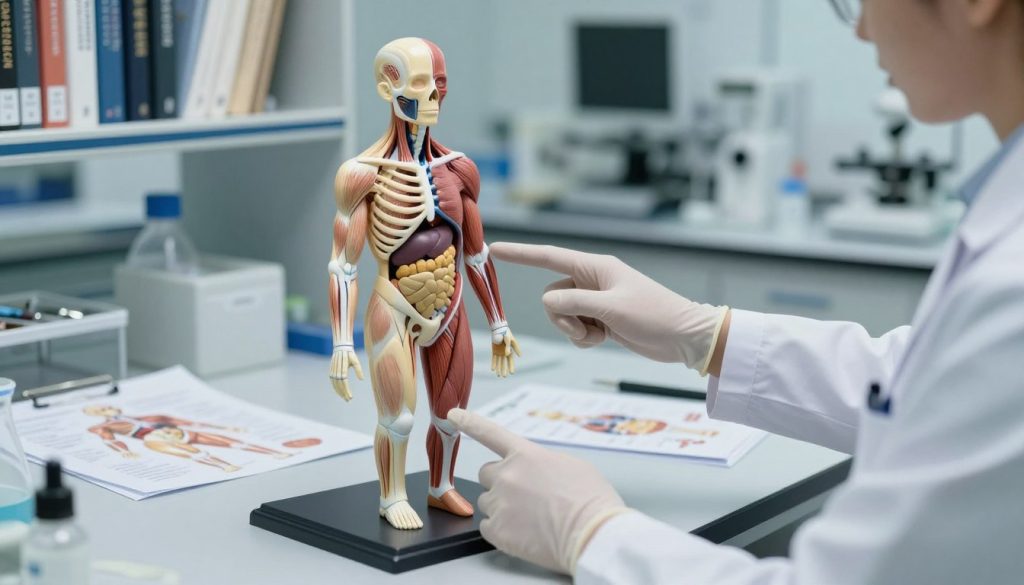
Mitigating Fusion Errors
Fusion errors happen when dual anatomy overlaps or the model blends nearby features. Use clear negative prompts to exclude extra genital merges and unwanted duplicates.
Be specific: list which parts should not fuse and give the model counterexamples. Platforms with prompt presets and negative-token support speed this process.
Correcting Limb Proportions
Wrong limb length or extra limbs ruin a character’s design. Tell the model exact joint counts and measure ratios—waist to knee, knee to heel—to guide shape and motion.
Many users rely on anime-style models because that style hides small errors and helps maintain the female body silhouette. Still, check every render and use platform tools to refine details for better accuracy.
“Prompt engineering and iterative checks are the fastest way to reduce artifacts and raise quality.”
Fine-Tuning Models for Genre-Specific Accuracy
Fine-tuning narrows a model’s blind spots so your designs reflect exact anatomy and style choices.
Civitai hosts over 1,800 models tagged with “futanari,” showing how the community refines genre work. You can use those pre-tuned weights or train your own.
Fine-tuning teaches the engine the specific anatomy and visual features you need. That reduces odd merges and speeds creation.
Expect to spend time curating datasets and testing prompts. Good datasets focus on pose, silhouette, and consistent anatomy details.
- Save time: start with a community model if you can.
- Experiment: vary training images to improve accuracy.
- Document: note effective prompts and settings for future runs.
“Fine-tuning is the difference between generic outputs and reliable, high-quality art.”
| Step | Benefit | When to Use |
|---|---|---|
| Use pre-tuned model | Fast, higher baseline accuracy | When time is limited |
| Custom fine-tune | Tailored anatomy and style | For unique designs or long runs |
| Iterative testing | Reduces artifacts over time | During pipeline refinement |
Integrating Stylistic Modifiers for Visual Cohesion
Stylistic modifiers help glue visual elements so your designs read as a single, coherent work. Apply filters and presets to reduce jarring shifts between shots and keep the look uniform across scenes.
Start by picking an anime or manga base. Choose a palette, line weight, and light style that match the tone of your stories. Keep those three rules as defaults in your trait bank.
Applying Anime and Manga Aesthetic Filters
Use platform tools to lock color grading and edge shading. That preserves the art’s appeal and reinforces the character’s shape in different poses.
- Palette & lighting: Set a small color range and a single light source to unify mood.
- Line work: Apply uniform stroke weight to avoid visual mismatch between panels.
- Model presets: Save filter stacks on the engine so you can reapply them fast.
“A unified style makes each character feel like they belong to the same fantasy world.”
When artists and platforms share a filter strategy, your futa character retains key traits across art and animation. This makes your work feel polished and ready for longer arcs.
The Importance of Negative Prompts in Generation
Negative prompts are your primary tool for steering generation away from anatomical glitches and stray limbs. Use them to tell the model what to exclude so it focuses on the features you want.
In practice, list terms like “deformed,” “extra limbs,” “merged anatomy,” and “duplicate genitalia” so the model avoids those artifacts. That simple exclusion often fixes the worst fusion errors during adult image creation.
Many platforms let users save negative lists. Save yours and apply them across sessions to keep output clear and reliable. This saves time and reduces edits after each render.
- Be explicit: name the artifacts you do not want, not just vague warnings.
- Test and refine: tweak negative tokens if the model still produces wrong anatomy.
- Save presets: store negative prompt banks on the platform for repeatable results.
“Negative prompts transform vague direction into precise control, improving both image quality and workflow speed.”
Ethical Considerations in Adult Content Creation
Ethical creation demands clear consent, transparent policies, and careful handling of user data. Before you publish adult content, confirm platform rules and age-gating measures. This protects users and helps you avoid takedowns.
Respect and intent matter. Treat the futanari genre and its roots in anime and hentai with care. Credit influences and avoid misrepresenting cultures or creators.
As a creator, prioritize consent from collaborators and models. Use anonymized data where possible and get explicit agreements for any shared material. That practice protects privacy and builds trust in your community.
- Know platform policies: follow adult content rules to keep access and avoid penalties.
- Respect the community: honor genre history and diverse users when you design figures and body features.
- Share responsibly: control distribution and label content to inform viewers.
“High ethical standards keep the futanari community creative, welcoming, and safe for all users.”
Conclusion
Capping this guide, know that mastering stability in your work rewards both craft and storytelling. You learn to use memory engines, pose locks, and prompt technique so your figures stay true across scenes.
Whether you make anime or manga style art, or write long-form stories, these tools cut rework and sharpen your creative intent. Pick platforms that match your workflow and save presets for style and pose data.
As you refine prompts and tooling, your futa character and other characters will feel more real and engaging to your audience. Thank you for exploring these methods—keep testing, and push your art and content forward.
FAQ
What does "Keep Futa Characters Consistent with Archetypes & Pose Locks" mean for my workflow?
It means you should define a clear archetype and visual pose rules for each character, then apply them across art, prompts, and stories. Fixing a pose or set of poses and noting signature traits — body shape, hair, wardrobe, and voice — helps maintain recognizability across sessions and platforms like ArtStation, Pixiv, or custom model deployments.
How do archetypes influence audience appeal?
Archetypes create instant emotional shortcuts for your audience. By selecting a core persona — e.g., tsundere, nurturing, or aloof — you guide design choices, dialogue, and styling. That boosts engagement in anime, manga, and adult genres because users quickly grasp character intent and aesthetic.
What are the "core traits" you should define first?
Start with anatomy (body type, proportions), signature clothing, temperament, and a few recurring behaviors or catchphrases. Also record anatomical specifics that matter to artists or models, such as hip-to-waist ratio, limb length, and any fantasy elements like tail placement or digitigrade legs.
How do you establish personality baselines that stay consistent across stories?
Write short character briefs with a list of do/don’ts for dialogue and actions. Use those briefs when prompting generative engines or briefing illustrators. Keep a living document—update it after approved changes so you don’t lose continuity between sessions.
Why is anatomical vocabulary important for prompting?
Precise terms reduce ambiguity in image and text generation. Use clear descriptors like “plantigrade stance,” “tail root at sacrum,” or “long forelimbs” instead of vague modifiers. That improves output quality across tools like Stable Diffusion, Midjourney, and custom LLM/image model pipelines.
How should you balance human and fantasy anatomy in designs?
Prioritize believable joint mechanics and silhouette harmony. Mix one or two fantasy traits—such as digitigrade legs or an elongated muzzle—while keeping overall proportions plausible. Test with multiple reference angles to confirm motion and balance look natural.
What do digitigrade vs plantigrade leg designs change about character movement?
Digitigrade legs give a more animalistic, springy gait and change knee placement visually. Plantigrade legs read as human and support grounded, familiar motion. Choose based on the character’s energy and the genre’s visual conventions to keep animation and poses coherent.
How should I specify tail attachment mechanics to artists or models?
State the exact attachment point (low, mid, or high sacrum), tail thickness along the length, and mobility range. Provide skeletal references or orthographic views so riggers and artists can place bones and textures consistently across assets.
What details matter for muzzles and facial expressions?
Describe snout length, nostril shape, and lip mobility, plus how those features affect expressions. Note whether smiles show teeth, if noses flare, or if certain expressions are muted. Precise facial rules prevent accidental humanization or cartoonish distortion.
Which platforms offer the best memory engines for cross-session consistency?
Platforms with persistent context or user memory—like Character.AI for dialogue continuity or custom fine-tuned instances on Hugging Face and local LLM deployments—help keep personality and facts stable. For image state, use asset libraries on Artbreeder or cloud storage combined with stable checkpoints.
How do pose locks support visual stability?
Pose locks freeze limb and posture relationships so you only adjust expression, lighting, or clothing. Use layered PSDs or rig presets in Blender, Spine, or Live2D, and reference pose sheets when prompting generative engines to reproduce the same silhouette reliably.
How do you use reference images effectively for consistency?
Collect multiple orthographic and action-view images, label them, and include notes on scale and color palette. Feed them as reference inputs to image models or attach them to briefs for artists. Consistent references reduce iteration time and visual drift.
What strategies ensure cross-session narrative continuity?
Keep a timeline and canonical document of events, relationships, and unresolved threads. Use version control for story drafts and tag key moments. When you resume, paste a short canonical prompt summary so generative systems retain context and avoid contradictions.
What are common anatomical artifacts to watch for in generated images?
Look for extra limbs, merged fingers, distorted joints, and inconsistent tail attachment. These usually stem from ambiguous prompts or weak reference examples. Tightening your descriptors and adding negative prompts helps reduce those failures.
How do you mitigate fusion errors when combining human and animal traits?
Isolate features and test them independently—face, torso, limbs—then merge with careful layering. Use anatomical studies and rigged prototypes to confirm joint placement. If a model produces fused areas, add corrective examples and negative prompts to clarify boundaries.
What are quick fixes for incorrect limb proportions?
Provide ratio guidelines (e.g., limb length relative to torso), supply skeleton keyframes, and include corrective reference images showing proper proportions. For AI generation, add explicit constraints like “arms reach mid-thigh” or “thighs half torso length.”
When should you fine-tune models for genre-specific accuracy?
Fine-tune when stock models repeatedly fail to capture style, anatomy, or tone you need. Use curated datasets with high-quality examples from anime, manga, or adult art that reflect your desired aesthetic. Keep a validation set to prevent overfitting to a single artist’s look.
How do stylistic modifiers improve visual cohesion?
Apply consistent filters—line weight, cel-shading, color temperature, or grain—to all assets. In prompts, include style tags like “anime cel-shaded,” “manga screentone,” or specific artist-influenced techniques to maintain a unified look across renders.
Why are negative prompts important in generation?
Negative prompts remove unwanted artifacts, styles, or anatomical errors. Use them to ban extra limbs, blurred faces, and off-model proportions. Clear negative lists speed up convergence on the intended result without repeated edits.
What ethical issues should you consider when creating adult content?
Ensure consent, avoid depicting minors, and follow platform rules and local laws. Respect artist rights when using reference art, and disclose when you use AI generation. Keep distribution channels age-gated and compliant with community standards like those on Patreon and Discord.