

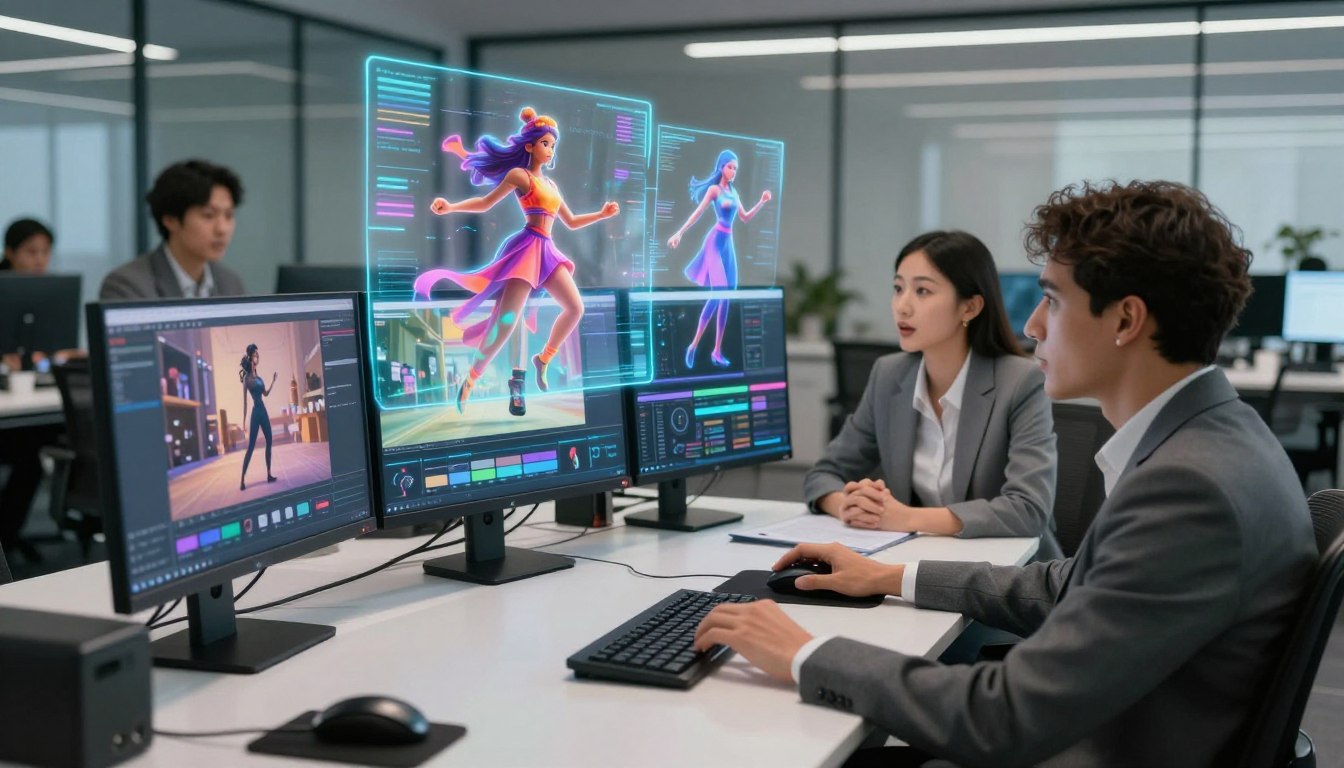
Can a platform truly turn still art into smooth, believable movement without breaking character or style?
Your experience starts with MyBabes.ai, a platform built to test the limits of a futa ai video generator in a secure setting. You control settings and tweak motion so your creation matches the look you want.
The system helps keep consistent visuals across styles. Many users say the model delivers better results than generic tools, especially for the futanari genre.
Whether you need short clips or longer pieces, the platform focuses on stability and motion fidelity. You’ll find the right balance of control, creation options, and model settings to refine your content and achieve cinematic results.
Key Takeaways
- MyBabes.ai offers control over motion and settings for specialized content.
- The platform keeps visuals consistent across different styles.
- Users report superior results compared to generic tools.
- Futanari characters stay stable throughout generation runs.
- Works for both short clips and longer videos with fine-tuning options.
Understanding the Capabilities of a Futa AI Video Generator
Specialized platforms let you turn a single photo into a short cinematic clip that still feels true to the original character. Vivago.ai, for example, can turn photos into 10-second cinematic videos with background music and dynamic visuals.
These tools combine multiple leading models to speed up generation while keeping high-quality results. That means your futa girl scenes keep consistent lighting, motion, and facial nuance that rival OpenAI Sora 2 and Google Veo 3.1.
You can add text prompts to an image to guide creation. A clear prompt helps the image generator place motion, mood, and camera moves where you want them.
- Quick clips: rapid generation for short social-ready clips.
- Model blending: multiple models improve visuals and style matching.
- Prompt control: text guides scene pacing and expression.
Overall, the platform feature set is built for fast, polished creation of scenes and short videos that fit creative projects and personal content needs.
Preparing Your Character for Cinematic Motion
A strong, crisp image gives motion pipelines the structure they need to animate your character believably. Start with a high-resolution portrait that shows clear facial features, stable pose, and accurate proportions.
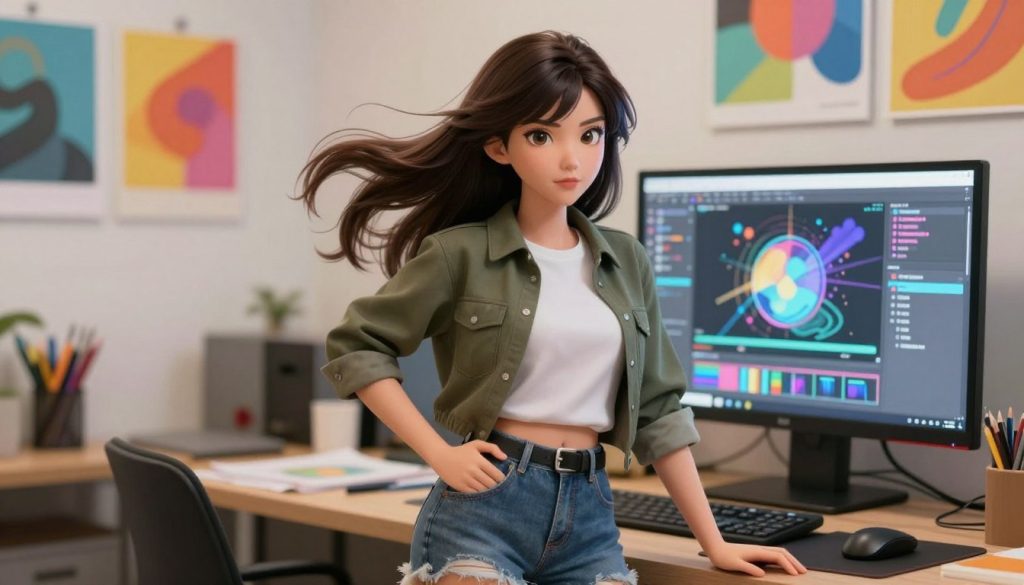
Selecting your source image: Choose images with good lighting and minimal blur. That helps the image generator preserve anatomy during motion. Use multiple reference images if you plan varied actions.
Defining personality traits: Write short text prompts that explain mood, gait, and expression. Give your character a backstory to add emotional depth. This guides motion choices and keeps scenes feeling alive.
Balance fantasy and technical needs by pairing style notes—anime or realism—with concrete motion cues. Test different images and prompts to refine control and create unique futa characters that move with believable life.
- Start with clear images for structural integrity.
- Use concise prompts to set mood and motion.
- Refine background history to boost immersion.
Configuring Motion Prompts for Dynamic Scenes
Fine-tuning motion prompts gives you direct control over how characters occupy space and react in each scene. Start by choosing a duration: the engine renders either a 3-second or 5-second clip to match your desired level of detail.
Once inside the video suite, you configure motion prompts that define how your futa character interacts with props and the environment.
Utilizing Advanced Behavior Tags
Behavior tags let you specify complex actions and pacing. Use concise text prompts to name gestures, contact points, and energy levels.
“Precise tags reduce iteration time and keep motion consistent across images and styles.”
- Duration choices: 3s for quick loops, 5s for richer detail.
- Behavior tags: define interaction, stimulation, and choreography.
- Settings: tweak motion strength, smoothness, and timing.
| Setting | Purpose | Typical Use | Effect on Output |
|---|---|---|---|
| Duration | Clip length | 3s / 5s | Detail vs. quick loop |
| Behavior Tag | Action spec | Contact, thrust, hold | Realistic interaction |
| Motion Strength | Animation intensity | Low / Medium / High | Energy and tempo |
Tip: Use precise prompts and iterate with small changes. These tools help you polish characters and scenes so each motion reads with the clarity and detail you expect.
Enhancing Visual Consistency and Anatomical Accuracy
High-bitrate processing locks in fine detail so characters stay coherent from still frame to short clip. This matters when you move from single images to short scenes.
The Role of High-Bitrate Pipelines
High-bitrate fidelity for stable motion
Our specialized pipeline uses over 1.2 million parameters fine-tuned for genre-specific physics. That tuning helps keep anatomy correct and reduces jitter between frames.
2K upscaling to remove artifacting
Native 2K upscaling is a key feature that removes common artifacts seen in cheaper video generator tools. You get cleaner edges, crisper detail, and fewer compression issues.
Maintaining Structural Integrity
Settings that preserve anatomy and expression
Adjust your settings to lock facial landmarks and body proportions. This prevents the shifting faces and warped limbs that break immersion.
“Fine control over bitrate and upscaling turns a good image into believable motion with consistent results.”
- Accuracy: 99.8% visual match across frames.
- Stability: high-bitrate models keep visuals consistent for both art and complex generation.
- Realism: anatomical support for futanari content preserves realism and detail.
Leveraging Community Styles and Remixing Tools
Remixing other users’ prompts gives you a shortcut to fresh ideas and refined visuals. You can adapt proven prompts and tweak text to match your vision for a futa character.
The platform offers simple tools to turn photos into animated visuals. Use shared styles to explore anime or fantasy designs and see how different models affect motion and expression.
Share and learn: Upload your images or pick a high-performing prompt from the library. Then iterate on timing, motion strength, and style until the scenes feel right.
- Remix prompts to speed creative experiments.
- Test multiple models and styles for the best look.
- Share work to get feedback and discover new techniques.
“Iterating on top prompts is one of the fastest ways to improve your content.”
Why Specialized Models Outperform Generic AI
Specialized models learn niche anatomy and storytelling cues, so they render movement and expression more faithfully.
When a platform is built for a specific genre, it knows the rules of proportion, posture, and interaction. That focus reduces common errors and keeps your character consistent across images and short clips.
You gain more control over emotional depth and realism. Advanced settings let you lock facial landmarks, tune motion strength, and refine timing. Text prompts become more effective at shaping scenes and style.
Dedicated tools also let you craft complex choreography and character beats that generic systems struggle to interpret. Users who switch to a focused platform report better results and fewer revisions.
The mix of art, technical precision, and prompt control makes these models ideal when you want a unique futa girl character to feel alive. For creators aiming at realism and fantasy alike, specialized models turn ideas into reliable, immersive results.
“Choosing a model built for the genre ensures your creative vision stays intact.”
- More accurate anatomy and visuals.
- Tighter control over text prompts and settings.
- Better results for scenes, style, and character life.
Conclusion
In short, quality images paired with thoughtful motion controls produce the most believable results,
You master a futa girl generation workflow by starting with strong source art and tuning motion settings for your character. Use specialized platforms and precise tools to keep anatomy and visuals consistent.
Whether you build a new futa companion or refine an existing girl, control matters. Test prompts, tweak motion strength, and iterate until frames feel natural.
We hope this guide gave you practical steps and clear techniques to push your projects forward. Experiment often — that is how the best videos and images are made.
FAQ
Can this platform produce smooth, cinematic motion from a single still image?
Yes. You can convert a single photo into a moving sequence by using motion-aware models and frame-interpolation techniques. Start with a high-resolution image, enable motion prompts, and select a pipeline that supports temporal coherence to avoid jitter and unnatural movement.
What source images work best for realistic movement?
Choose clear, well-lit portraits with neutral backgrounds and defined anatomy. Frontal or three-quarter views with visible facial features and consistent lighting give the model the data it needs to generate believable motion and maintain structural integrity during animation.
How do you define personality and expressions for a character?
You use concise trait tags and descriptive prompts that specify emotional tone, gesture patterns, and facial micro-expressions. Combine personality labels with scene cues—like confident stride or shy glance—to guide timing and body language throughout the clip.
What are motion prompts and how should you configure them?
Motion prompts are short directives that tell the model how the subject should move. Set parameters for speed, range of motion, and continuity. Use verbs and adverbs (e.g., glide smoothly, subtle head turn) and pair them with scene context to shape animation behavior.
Which advanced behavior tags improve realism?
Tags for micro-expressions, gaze shifts, breathing, and secondary motion—like hair sway or clothing drift—add depth. Also use timing tags to control onset and decay of movements, ensuring actions feel natural rather than abrupt.
How does a high-bitrate pipeline help visual consistency?
High-bitrate processing preserves detail across frames, reducing compression artifacts and color shifts. It keeps textures and facial features stable, which is essential for continuous motion and for maintaining the illusion of the same character through each frame.
What is native upscaling and when should you use it?
Native upscaling enhances resolution within the rendering pipeline rather than after export. Use it when you need crisp close-ups or plan to display the clip at large sizes; it preserves edges and reduces interpolation errors during motion.
How do you maintain anatomical accuracy during complex movements?
Enforce structural constraints through body-pose priors and reference skeletons. Combine these with corrective passes that realign joints and facial landmarks. Regularly preview intermediate frames to catch distortions early and fine-tune prompts.
Can community styles and remixes improve my results?
Yes. Leveraging community-created styles and remix presets speeds iteration and exposes you to proven parameter combinations. Study popular packs for lighting, color grading, and motion cues, then adapt them to fit your character’s personality.
Why choose specialized models over generic ones for character motion?
Specialized models are trained on domain-specific motion and anatomy, so they handle nuanced behaviors, preserve identity, and reduce artifacts. They give you finer control and generally produce higher-quality, more consistent results than broad-purpose models.
What controls should you tweak first to improve a problematic clip?
Start with motion speed, continuity weights, and pose constraints. Then adjust lighting consistency and temporal smoothing. If artifacts persist, increase bitrate or switch to native upscaling and rerun the sequence.
Are there ethical or legal considerations when animating real people?
Yes. Always obtain consent before animating identifiable individuals and respect copyright and privacy laws. Use disclaimers and follow platform policies to avoid misuse or distribution of non-consensual content.