

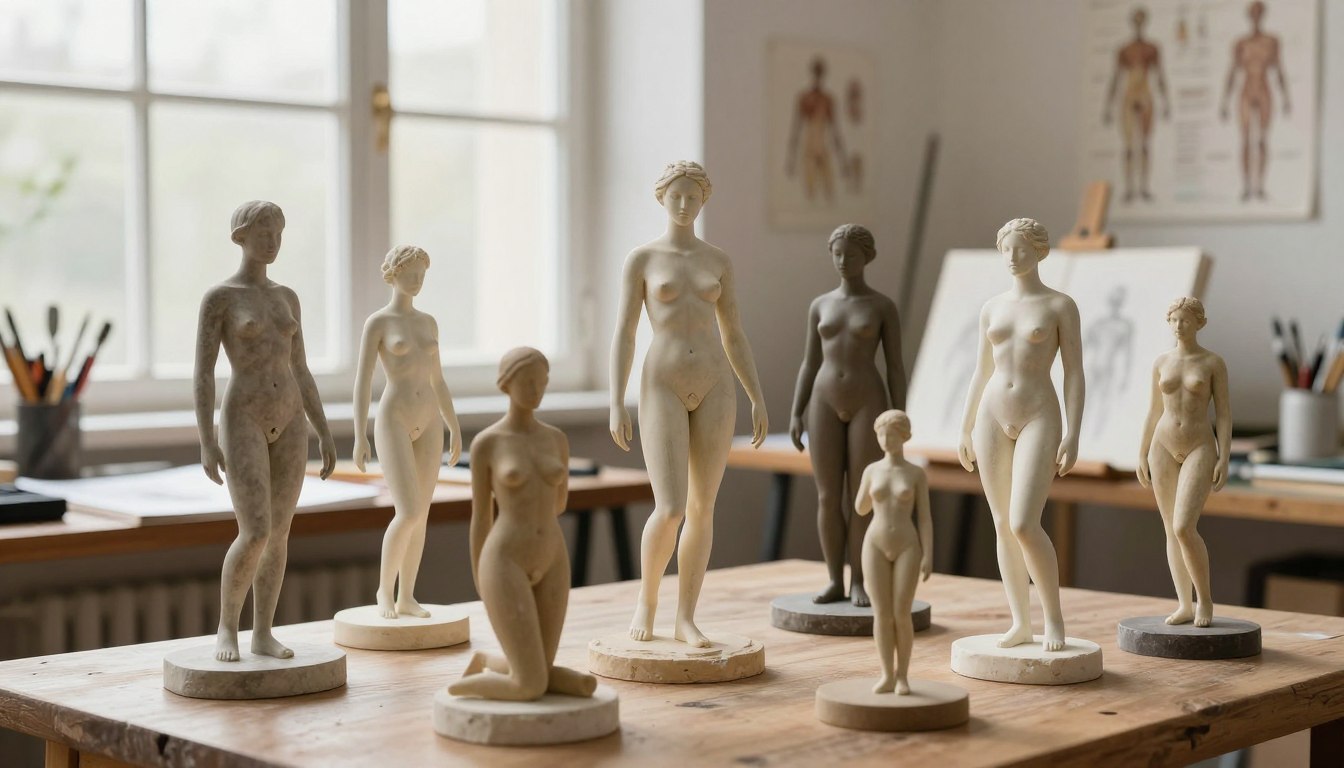
Can a single line of direction unlock flawless anatomy in your AI art? You might think complex tweaks are required, but targeted guidance often makes the biggest difference.
This guide gives you 80 focused aifutaporn prompts crafted for 2025. You will learn how to shape an image with clear definitions for proportions, lighting, and texture.
Each formula helps you control pose, muscle flow, and facial proportion so your results look deliberate and polished. The approach is practical. It uses advanced prompt engineering to help you achieve consistent, professional-grade output.
Follow these methods and you will gain better control over anatomy, realistic shading, and complex poses. By the end, your image generation will feel more precise and reliable.
Key Takeaways
- You will get 80 specific formulas to refine anatomical accuracy.
- The guide shows how to craft an image with clear proportions and lighting.
- Techniques focus on pose, texture, and realistic detail.
- Applying these methods helps produce consistent, professional results.
- Instructions are tuned for AI art workflows in 2025.
Understanding the Role of AI Prompts
When you feed an AI a precise directive, you shape how it interprets pose, light, and form.
In 2025, mastering nsfw inputs is essential if you want consistently realistic adult images. Stable Diffusion and similar diffusion models turn a short text into a visual plan. That plan guides composition, mood, and anatomical detail.
These nsfw prompts serve as core instructions. They tell the model what to emphasize: muscle flow, proportions, or texture. With careful wording, you can push the model toward highly detailed outcomes and reduce guesswork.
- Stable Diffusion acts as the engine; your prompt is the steering wheel.
- In this year, over 20 free templates exist to help craft explicit scenes.
- Diffusion-based workflows let you iterate fast and refine anatomy with each pass.
Tip: Start with a clear prompt, then refine for style and realism. That method gives you faster control over lighting, pose, and final image fidelity.
Mastering Anatomy with AifutaPorn Prompts
Start by mapping simple proportional guides so the figure reads as believable in any view.
Defining Body Proportions
When you define the body of a girl, anchor key lengths: head, torso, and limb ratios. Use a side reference to check depth and silhouette.
Keep the face and hair in frame so the viewer reads the pose at a glance. A balanced body helps the woman appear natural, whether the scene is full view or a tight crop.
Achieving Anatomical Accuracy
Focus on the eyes, nose, and jaw alignment to avoid flat faces. For a realistic side view, nudge the eyes and ear forward slightly to show depth.
Choose an art style that complements the nude form and keeps attention on hair and face detail. Small adjustments to posture and shoulder tilt improve how the girl carries weight.
- Check proportions against a simple grid.
- Frame the hair so it supports the face shape.
- Adjust the eyes to match the chosen view for believable focus.
Essential Elements of a High-Quality Prompt
Lead with specific character and pose descriptors to shape the model’s output from the first pass.
Be precise about what you want. In 2025, a high-quality prompt must list anatomy cues, pose, and mood so the AI builds accurate nsfw images. Keep lines clear and avoid vague terms.
Specify lighting, camera angle, and atmosphere. These details help the model render skin tones, shadows, and depth. Prioritize quality over length to get highly detailed results.
Design each instruction to reflect your artistic intent. Balance technical cues with creative freedom so the final image feels natural and professional. Small, exact notes often yield the best results.
| Element | Why it matters | Example | Practical tip |
|---|---|---|---|
| Subject detail | Guides anatomy and gesture | “female, relaxed pose, 3/4 view” | List core traits first |
| Lighting & mood | Controls realism and texture | “warm rim light, soft shadows” | Pick one dominant light |
| Finish & style | Determines final polish | “photoreal, highly detailed skin” | Use concise style tags |
Setting the Scene and Environment
A well-chosen environment makes the girl feel part of a story rather than pasted on a background.
Creating Immersive Backgrounds
Place the woman in a room or on a bed that supports the mood you want. Keep the scene simple so the body and face read clearly.
Positioning matters: have the girl sit on the side of the bed or stand near a window to add natural lines. Let the hair frame her face so the eyes become the focus.
Adjust small props to show interaction. A folded blanket, a chair turned slightly, or a low table helps the body look natural in the view.
“A believable environment gives context to the figure and makes the image feel intentional.”
| Element | Practical tip | Why it helps |
|---|---|---|
| Room layout | Use simple furniture to frame the woman | Creates depth and a clear view of the body |
| Hair & face | Keep hair contrast high against background | Draws focus to the eyes and expression |
| Bed placement | Pose the girl at the side or center for balance | Produces natural contact and believable weight |
- Plan the environment to shape atmosphere.
- Prioritize face and eyes while keeping the body integrated.
- Small details in the room boost realism and depth.
Controlling Lighting and Shadows for Realism
The way shadows fall determines whether an image reads as flat or three-dimensional.
Use soft, directional light to reveal intricate details without harsh contrast. Soft light on skin and fabric brings out texture while keeping the room and background readable.
Set a primary light to shape forms and a secondary fill to soften shadows. That balance helps you create a believable photo and a convincing atmosphere.
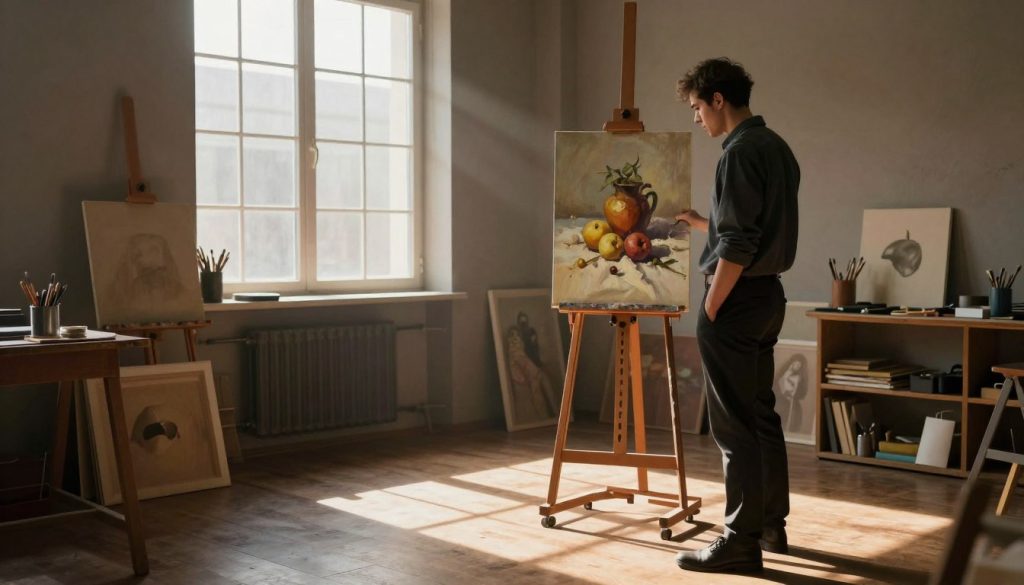
Pay attention to camera placement and how the light hits the bed and nearby props. Small shifts in angle change shadow length and the perceived dimension of the scene.
- Use low-key shadows to add drama without losing intricate details.
- Keep the background subtle so the subject remains the focal point of the photo.
- Adjust light intensity to produce a highly detailed image with natural depth.
Refining Facial Expressions and Features
A clear direction for mouth, eyes, and lighting turns a neutral face into a story.
Capturing Seductive Expressions
Start by shaping a subtle, seductive smile. Keep the curve small so the woman reads as natural and confident.
Place the light on the face to catch the smile and to add a soft catchlight in the eyes. When you view the girl from the front, this lighting makes the face the focal point.
Enhancing Eye Detail
Eyes sell the expression. Add tiny reflections and defined lashes to increase depth and focus.
Work hair around the face to frame the eyes and highlight facial features. Adjust light and shadow to push the eyes forward while keeping the rest of the body readable.
Small, repeated tweaks to expression, hair placement, and lighting produce a more intimate front view. Emphasize the face and eyes first; the rest of the body and hair will fall into place with correct depth and details.
Selecting the Right AI Image Generator
A good image engine gives you control over style, resolution, and realistic camera behavior.
Choose Stable Diffusion when you want flexible control and strong community tools. Stable Diffusion is a core option in 2025 for producing high-quality photo realism and layered edits.
Try Aitubo AI if you need high-resolution output and image-to-medium features. Aitubo lets you tweak the style of an image quickly and preserve fine detail in a photo.
Think about the camera settings the generator simulates. A professional camera option can sharpen depth, bokeh, and skin texture so your art reads as a real photo.
| Generator | Strength | Notable features |
|---|---|---|
| Stable Diffusion | Flexibility for iterations | Open models, community checkpoints |
| Aitubo AI | High-res output | Image-to-medium, style controls |
| Choice tip | Match goal | Pick based on desired photo style and needed features |
- Pick the generator that matches your desired image and art style.
- Use camera-like settings to improve realism in portrait or coffee scene photos.
Utilizing Advanced Prompt Engineering Techniques
Refining how you ask the model is the fastest path to consistent, high-quality nsfw images.
Start simple, then iterate. Write a clear base prompt that lists pose, lighting, and skin detail. Run the generator, note errors, and adjust only one element each pass.
In the year 2025, over 20 free nsfw prompts and templates exist to speed testing. Use these as a baseline, then replace style tags and anatomy cues until the image reads natural.
Iterative Prompt Refinement
Make small experiments: swap one adjective, change camera angle, or tighten proportion notes. Save each version so you can compare results.
- Use a detailed prompt for Stable Diffusion to give the model concrete context.
- Limit changes per run to isolate what matters.
- Record settings that improve anatomy, lighting, or texture.
| Step | Action | Why it helps |
|---|---|---|
| Baseline | Start with a concise, clear description | Creates a reliable reference point |
| Modify | Change one element per run | Shows which edits affect anatomy or mood |
| Refine | Use precise terms for texture and light | Improves realism in diffusion output |
| Save | Store successful versions | Builds a personal template library for future images |
Tip: Treat this as a lab. Over time, your refined wording will produce more accurate nsfw images with Stable Diffusion and other diffusion engines.
Balancing Artistic Style and Technical Precision
Marrying bold art choices with strict anatomical checks makes the final image feel intentional. When you craft a girl or woman in a nude scene, treat style and measurement as partners, not rivals.
Define your art style first so the light and shadows serve that choice. Then add technical cues for the face and eyes to keep expression and gaze accurate from every view.
For an old girl or mature woman, refine subtle face lines and eye highlights. Use soft lighting to flatter skin while keeping shadow edges precise so side views hold correct structure.
Keep checks small and repeatable: measure jaw angle, eye placement, shoulder slope. These simple rules help the woman maintain the intended expression and believable posture.
Result: a portrait that reads as expressive art but stands up to close inspection of face, eyes, and form.
Common Pitfalls in NSFW Image Generation
A predictable source of error is when your text mixes front view details with side-view depth cues. That confusion often leads the model to misplace the body or distort the face.
Avoiding Vague Descriptions
Be specific about the body and the face. Vague language forces the model to guess, which hurts eyes, expression, and proportion.
Specify the front view when you want a direct pose. Name the gaze, mouth shape, and eye catchlights so the face reads clearly.
Correcting Contextual Errors
Place objects in the scene so they support depth. A misplaced table or a misaligned bed can make the room look inconsistent.
Describe distances and contacts: how the hand meets the bed, or how a table sits near the subject. Those notes fix scale and depth problems fast.
Managing Prompt Length
In the year you work, shorter, well-ordered lines beat long, rambling instruction. Keep each prompt focused: one sentence for pose, one for lighting, one for the room.
Iterate by changing only one element per run. Save successful lines and reuse them to build reliable nsfw images that look intentional and error-free.
- Tip: Be concise about body, face, and eyes to avoid common mistakes.
- Use clear scene markers—table, bed, room—to keep depth believable.
Optimizing Resolution and Image Focus
High-resolution choices anchor visual clarity, letting light and shadow read correctly. Set a clear resolution target before you generate. Aitubo AI and similar engines deliver high-res output that preserves fine texture and improves overall quality.
Use camera-like settings to lock in a clean photo look. Specify focal length and aperture so the model treats depth and bokeh like a real camera. That helps the background sit at the right distance from the subject.
Balance your lighting so shadows enhance form without eating detail. Soft, directional light brings out skin texture and fabric while keeping the background immersive.
Adjust resolution to match the final view you need. A higher pixel count gives you room to crop without losing quality. Every photo should have a clear focus point and an atmosphere that supports the scene.
- Pick high-res output for sharper image and better quality.
- Match camera settings to preserve depth and focus.
- Control light and shadows to make the photo feel three-dimensional.
Incorporating Clothing and Texture Details
Small texture cues in clothing make the woman feel more present and three-dimensional.
When you add lace or fine fabric, aim for patterns that support the hair and face. Lace gives delicate contrast against skin and helps the body read as tactile rather than flat.
Always check resolution before you add intricate lace. High resolution preserves the weave and tiny shadows that sell realism on a girl or woman.
Match style to silhouette: the clothing should complement the hair, body shape, and the overall style of the scene. That creates a cohesive, high-quality result.
| Element | Why it matters | Practical tip |
|---|---|---|
| Lace pattern | Adds texture and depth | Use close-up passes at high resolution |
| Fabric weight | Affects how the body reads | Pick light fabrics for soft drape, heavy for structure |
| Color & contrast | Frames hair and face | Keep contrast subtle to keep skin natural |
- Focus on lace and fabric to raise the perceived quality of the girl’s clothing.
- Render fabric at a resolution that captures intricate details without blur.
- Let clothing style support hair placement and overall body composition.
Managing Complex Poses and Body Dynamics
Complex poses demand a clear plan so the model renders realistic body motion and weight. Use Stable Diffusion to anchor how the limbs meet each other and the surface in the room.
When you set the scene, think of contact points. Note where the shoulder, hip, or hand touches the bed or floor. That keeps the image grounded and fixes common anatomical errors.
Choose a camera angle that highlights body dynamics. A deliberate side or three-quarter view makes the spine and hip line readable. This gives the photo a clear, professional look.
Pay attention to hair and background details. Hair placement frames the face and clarifies motion. A simple background or subtle room props improves overall composition and keeps the focus on the pose.
“Define contact and angle first; refine hair and background next to keep the pose believable.”
- Use Stable Diffusion to iterate on weight, contact, and silhouette.
- Lock a camera angle, then tweak hair and background details per run.
- Keep the bed or room elements consistent to avoid scale errors.
| Goal | Practical step | Why it helps |
|---|---|---|
| Body contact | Mark shoulder/hip/hand points | Prevents floating limbs and improves weight |
| Camera angle | Pick side or 3/4 view | Clarifies posture and depth in the image |
| Hair & background | Frame face; simplify room | Maintains focus and raises realism |
Leveraging Community Resources for Inspiration
Crowdsourced examples often reveal small details you might miss alone.
Join active channels on Discord where Discord bots and NSFW chatbots share quick ideas. You can ask for a short nsfw prompt that places an old girl on a bed and then refine it yourself.
In the year 2025, many artists use Stable Diffusion to post test images and settings. Watching their runs helps you see which camera and light notes work best for similar scenes.
Interact with the community to collect variations. Save working lines, sample seeds, and any image that shows a useful fix.
- Use bots to generate quick starting ideas you can tweak.
- Study shared images to learn framing and skin detail on a bed.
- Give feedback and ask for the exact prompt or camera tag used.
| Resource | What it gives you | How to use it |
|---|---|---|
| Discord servers | Idea pools and feedback | Join threads, save sample images |
| NSFW chatbots | Quick prompt suggestions | Ask for variations featuring an old girl on a bed |
| Stable Diffusion feeds | Shared settings and images | Copy camera/light tags, iterate locally |
Ethical Considerations in AI Art Creation
Respect for original creators should guide every choice you make when generating AI art. Keep the rights of photographers, artists, and models front and center as you build your images.
Think about impact. Ask how your image will be used and whether it could harm or misrepresent real people. Align your work with platform rules and community standards before you publish.
Be transparent about your process. When you share images, note the tools and techniques you used so others can evaluate provenance and intent.
Practical checks:
- Confirm licenses for any reference material you used.
- Verify that your tool use complies with terms of service and local laws.
- Keep clear records of sources and model versions for accountability.
“Maintaining high ethical standards helps build a healthier, more sustainable space for all creators.”
By prioritizing transparency and respect, you help protect creators and strengthen the community around AI art. These steps are simple, but they matter.
Conclusion
The closing notes collect practical actions you can take now to refine anatomy and style.
This guide gave you core methods to master AIFutaPorn use for better results in the year ahead. Apply the tool choices, lighting tips, and camera cues to improve each image you make.
Experiment regularly and log what works. Over the year you will see steady gains in composition and facial accuracy.
Final tip: treat every run as a test. Keep simple records, refine one element at a time, and let your art grow through repeatable practice.
FAQ
What is the purpose of the "80 AIFutaPorn Prompt Formulas for Perfect Anatomy" brief?
The brief gives you a focused collection of prompt formulas and guidance to help generate anatomically consistent adult-themed images using AI image generators. It emphasizes body proportions, facial detail, lighting, and scene composition so you can produce clearer, more realistic results.
How do AI prompts influence anatomical accuracy?
Prompts steer the model toward specific proportions, poses, and anatomical cues. By specifying limb lengths, joint placement, muscle tone, and head-to-body ratios, you help the generator prioritize realistic structure and reduce common errors like warped limbs or misaligned features.
What key terms should you include to define body proportions?
Use clear descriptors such as torso length, leg-to-torso ratio, shoulder width, hip span, and joint alignment. Combine those with modifiers like “natural curvature,” “balanced symmetry,” and “proportional limbs” to guide the model toward believable anatomy.
How can you achieve better anatomical accuracy in outputs?
Iterate prompts with reference images, call out specific landmarks (sternum, clavicle, hip crest), and include corrective phrases like “correct joint placement” or “no extra fingers.” Use higher guidance scales or sampling steps in your generator to refine detail.
What are essential elements of a high-quality prompt?
A strong prompt includes subject description, pose, anatomical details, lighting, camera perspective, texture cues, and desired art style. Keep language concise and prioritize the most important attributes to avoid dilution of focus.
How do you set the scene and environment effectively?
Describe the environment with sensory and spatial cues—room type, furniture, background depth, and scene mood. Specify camera angle, distance, and environment lighting to anchor the subject realistically within the scene.
What techniques create immersive backgrounds?
Add layered elements like furniture, window views, fabrics, and atmospheric effects. Mention depth cues such as foreground objects and background blur, and include materials and textures to increase realism and narrative context.
How should you control lighting and shadows for realism?
Specify light sources, direction, intensity, color temperature, and shadow hardness. Use terms like “soft key light from left,” “warm rim light,” or “subtle ambient fill” to shape three-dimensional form and skin detail accurately.
How do you refine facial expressions and features?
Call out micro-expressions, mouth and eye positioning, eyebrow shape, and cheekbone definition. Use concise descriptors like “gentle smile,” “soft gaze,” or “high cheekbone structure” to get the exact expression you want.
What wording helps capture seductive expressions without ambiguity?
Use specific facial cues—”half-smile with relaxed eyelids,” “slightly parted lips,” “tilted head”—and avoid vague adjectives. Pair expression cues with lighting and camera distance to control mood and impact.
How can you enhance eye detail in generated images?
Include terms for iris texture, catchlights, pupil size, and eyelash definition. Phrases like “crisp catchlight,” “detailed iris pattern,” and “clean lash separation” improve focus and emotional clarity in the face.
How do you select the right AI image generator?
Choose a generator that supports fine-grained control, high resolution, and iterative prompting. Compare models on fidelity, speed, and available guidance parameters. Test with the same prompt to evaluate which produces the most consistent anatomical results.
What is iterative prompt refinement and why use it?
Iterative refinement means adjusting wording, adding negatives, and testing variations to converge on the desired outcome. You should evaluate failures, tighten descriptions, and re-run generations until the anatomy and style meet your standards.
How do you balance artistic style with technical precision?
Prioritize anatomical correctness first, then layer artistic modifiers like realism, painterly strokes, or cinematic color grading. Keep style terms concise so they don’t override core structural instructions.
What common pitfalls occur in NSFW image generation?
Pitfalls include vague descriptions, conflicting modifiers, distorted limbs or features, and overlong prompts that confuse the model. You also risk contextual errors when scene and subject instructions clash.
How do you avoid vague descriptions?
Use measurable, visual terms rather than broad adjectives. Replace “beautiful” with “defined cheekbones” or “clear skin texture.” Limit each prompt to a few prioritized objectives to maintain clarity.
How can you correct contextual errors in outputs?
Add clarifying context—camera angle, spatial relations, and material behavior. Use negative prompts to remove unwanted elements and supply reference images when possible to ground the model.
What is the best way to manage prompt length?
Keep prompts focused: include essential anatomical cues, lighting, camera, and one style modifier. Use follow-up refinements rather than packing every detail into a single long prompt to reduce contradictions.
How do you optimize resolution and image focus?
Request high-resolution outputs and specify focal plane, aperture, and depth of field. Phrases like “85mm focal length,” “shallow depth of field,” or “crisply focused subject with soft background” help maintain clarity.
How should you incorporate clothing and texture details?
Name fabrics, pattern density, fit, and wear. Use descriptors such as “lace trim,” “silk sheen,” “tight-fit bodice,” or “subtle fabric stretch” to achieve realistic material rendering.
What prompts work best for adding lace and fabric textures?
Combine material attributes with close-up lighting: “delicate lace with visible weave,” “soft backlight highlighting translucency,” and “fine thread detail at 4k resolution” help the model render textile realism.
How do you manage complex poses and body dynamics?
Describe skeletal alignment, center of gravity, muscle tension, and limb relationships. Use action verbs and reference poses from dance or sports to convey motion and balance accurately.
Where can you find community resources for inspiration?
Look to dedicated forums, subreddit communities, and Discord groups that share prompt strategies, example images, and parameter settings. Peer feedback and open-source prompt collections help you refine your approach.
What ethical considerations should you keep in mind when creating AI art?
Respect consent, copyright, and platform policies. Avoid using identifiable real-person likenesses without permission and follow legal guidelines for adult content in your jurisdiction. Aim for responsible and respectful creation.