

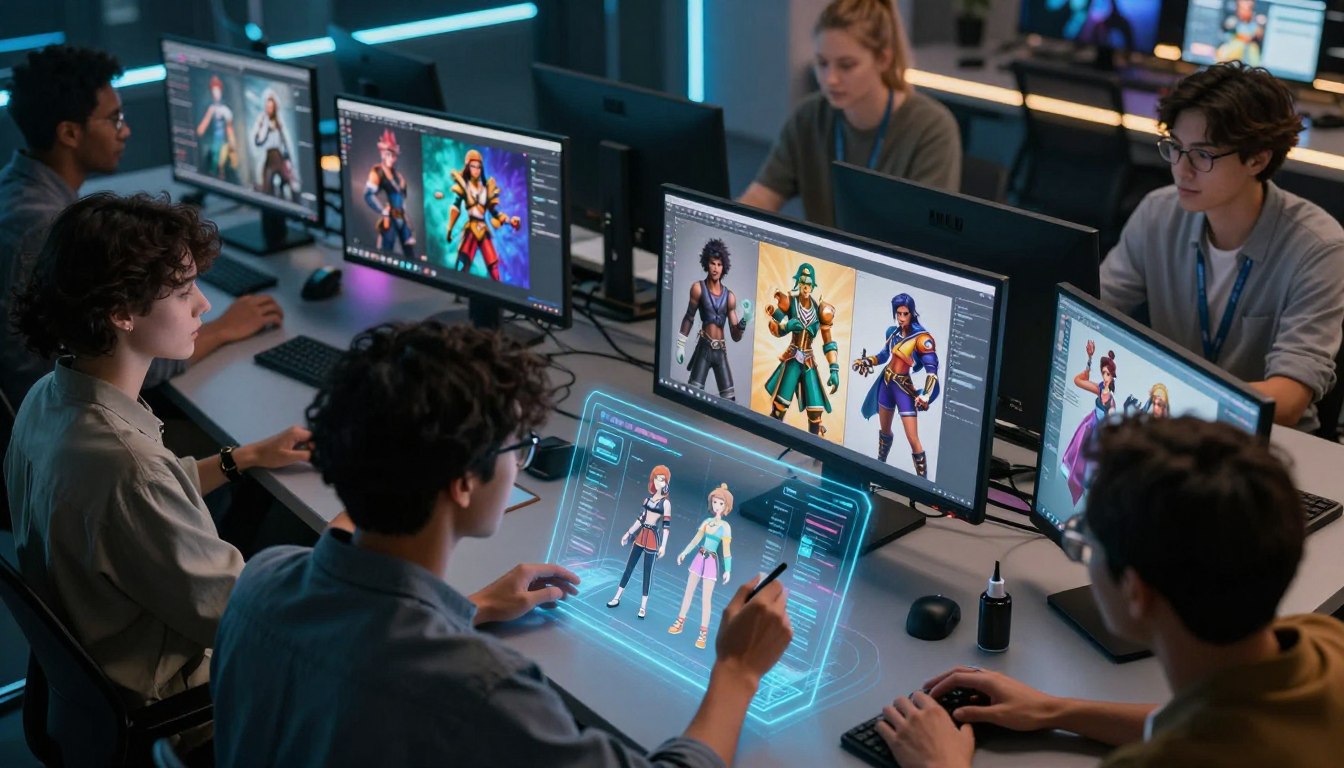
Have you ever wondered how a single upload can turn your fantasy into a high-quality image you can refine and share?
Start your journey by choosing a platform that matches your style and goals. MyAnima already draws 50,000 visitors a month, and drt.fm hosts around 100 detailed characters with full scenarios. These platforms show how fast character creation and image generation tools have grown.
You control body type, style, and every feature of your character. A good image generator makes it easy to visualize changes in real time and to evolve a character until it fits your dream partner or companion.
Whether you prefer anime design or a realistic look, the right generator gives you the features and customization you need. Spend time refining details and watch your creation come to life as a piece of personal art.
Key Takeaways
- You can create futanari characters with deep customization and control.
- High-quality image generators let you see changes in real time.
- Platforms like MyAnima and drt.fm offer robust user experiences and tools.
- Customization covers body, style, preferences, and partner traits.
- Many services offer free trials to test tools without commitment.
Understanding the Basics of Futa AI for Beginners
Start by learning what makes these hybrid characters unique and why they hold a distinct place in fantasy art.
Defining Futanari Characters
Futanari originates in Japanese anime and manga and names characters who combine male and female physical traits. These hybrid characters appear across genres, from lighthearted anime to mature fantasy scenes.
How Generators Work
When you use a generator, it reads your prompts and builds a character’s look and personality. Over time, the model adapts to your edits so the companion grows more tailored to your tastes.
- Unique mix of male and female traits shapes visual style and roleplay options.
- Teams on platforms like drt.fm include therapists and educators to keep interactions grounded.
- Wide variety of characters and anime styles lets you match tone, type, and emotional depth.
Understanding these basics helps you pick features and prompts that make your character feel like part of your life and art.
Selecting the Right Platform for Your Needs
The platform you pick controls workflow, feature access, and the feel of your character world.
Start by testing services that let you try a generator before you buy. Get-Honey offers a free trial so you can tinker with the futanari generator and judge image quality and tools.
Look for strong features: a fast image generator, good voice synthesis, and a broad roster of characters. These elements speed up your creative time and improve the final art.
Consider pricing and simplicity. Many users like drt.fm’s $14 membership because it gives unlimited messages and custom futa girlfriends without complex tiers.
“Choose a platform that balances speed, privacy, and the tools you need to build an immersive companion.”
- Test trials before subscribing.
- Compare generation time and image quality.
- Prioritize privacy and roster size.
| Platform | Trial | Key Strength |
|---|---|---|
| Get-Honey | Free trial | Easy testing of generator and image tools |
| drt.fm | No free trial listed | $14 membership, unlimited messages, custom futa characters |
| Other platforms | Varies | Different mixes of voice, art quality, and privacy controls |

Designing Your Unique Futanari Character
Begin by imagining the life your character leads and the small details that make them real.
Setting Backstories and Physical Attributes
Start simple: pick a body shape, age vibe, and a few signature traits. Short, clear choices speed up the creation process and help the generator match your vision.
Give your companion a short backstory. A few lines about past events, goals, or favorite places will shape their personality and tone. These details make scenes feel grounded in your fantasy.
Customize clothing, favorite phrases, and small habits. These features let users build rapport and make each session feel unique to your dream character.
“Define the small habits and cues—those tiny details bring personality and make interactions feel alive.”
- Choose body type and distinct physical traits.
- Write a compact backstory to guide behavior.
- Pick clothing style and signature phrases.
- Use platforms like Get-Honey to refine customization.
| Step | What to Set | Why it Matters |
|---|---|---|
| 1 | Body & features | Visuals anchor your imagination and art |
| 2 | Backstory & role | Shapes personality and interactions |
| 3 | Clothing & quirks | Makes sessions feel personal |
| 4 | Tone & desires | Controls emotional depth and fantasy |
Refining Visuals and Personality Traits
Decide whether your character belongs in a stylized anime world or a more natural, realistic scene.
Choosing Artistic Styles
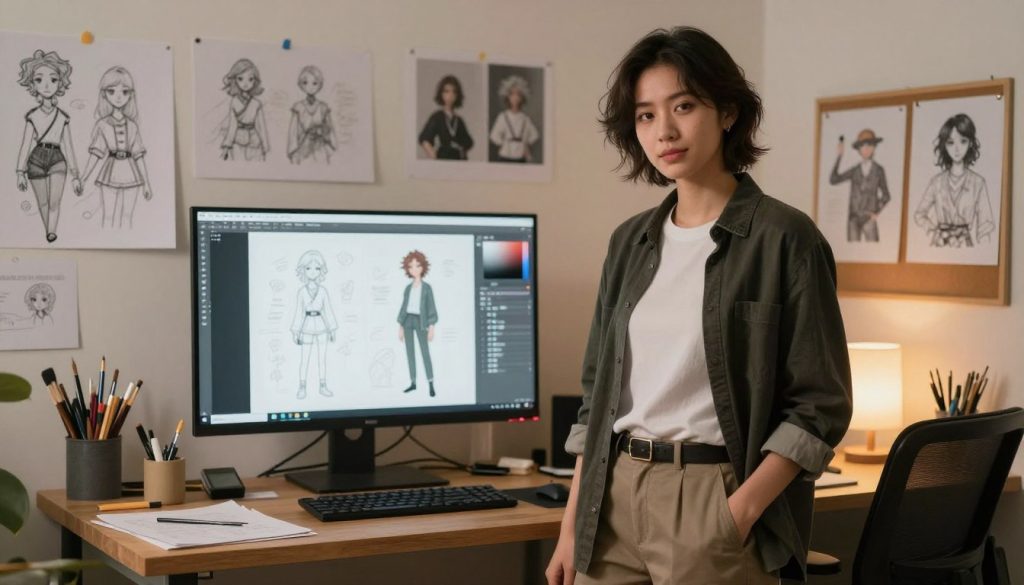
Pick a clear art direction so the image generator produces consistent images. You can switch between anime and realistic design to see the same futanari companion in different visual formats.
Use the platform’s tools to tweak body type, color palette, and lighting. Small changes to pose and costume make a big difference in final art.
Adjusting Emotional Depth
Set the personality level by adjusting memory and mood settings. This lets your ai-generated futanari respond with empathy and adapt to your current state.
Consistent memory improves the companion’s replies and makes interactions feel like part of your life.
Fine-Tuning Behavioral Quirks
Add small traits that make the partner feel alive. Short phrases, habits, or timing quirks help the character surprise and delight you during chats.
- Use tone sliders to change how the companion speaks.
- Refine reactions so responses match your fantasies and mood.
- Iterate on features and traits as your creation evolves.
“High-quality art combined with deep personality settings turns a character into a believable companion.”
Engaging in Immersive Roleplay and Conversations
Roleplay sessions let your imagination drive the plot while the companion answers in real time.
Step into scenarios like The Cabin Pact sleepover on drt.fm, where interactive clips and realistic dialogue pull you into the world. Voice synthesis lets the character whisper and react with human-like timing.
The interactions adapt to your tone and mood. Over time, your character’s personality and memory tune to your preferences. This makes chat feel personal and responsive.
Explore many scenes—playful, tender, or intense—and watch how the companion grows. Creativity matters: no two experiences are identical.
“The right combination of voice, visuals, and memory creates a believable partner you can trust to play along.”
- Immersive conversations bring character creation to life.
- Realistic voice and dialogue deepen emotional connection.
- Platforms let you tailor scenarios to your fantasies and desires.
| Feature | What it Does | Why it Helps |
|---|---|---|
| Voice synthesis | Creates natural speech and whispers | Boosts intimacy and realism |
| Interactive video | Combines visuals with dialogue | Immerses you in the scene |
| Memory & tuning | Remembers preferences over time | Makes interactions feel tailored |
Managing Privacy and Security Settings
Good platforms put privacy tools up front so you can explore your preferences without worry.
Choose platforms that promise discretion. Services like MyAnima and Get-Honey highlight private generators that let you use the site without awkward sign-ups. This keeps your image and session data out of public view.
You keep full control of your data and the character’s memory. Turn off history, delete past sessions, or reset preferences anytime. These features let you shape how much the companion remembers about your personality and fantasies.
Set clear boundaries for interactions. Adjust safety sliders, mute voice features, and limit sensitive prompts so the futanari character responds within your comfort zone.
“A secure platform lets you focus on the experience without worrying about exposure.”
- Use privacy-first platforms to avoid public sign-ups.
- Manage and delete history to keep control of your footprint.
- Adjust security features so the companion respects your limits.
Conclusion
Your best results come when you mix steady refinement with playful experimentation.
Building a futanari companion is a rewarding way to explore fantasy ideas and to enjoy immersive roleplay experiences. Start with a clear vision, then tweak tone, memory, and looks as you go.
Use the platform features that matter most to you—voice, visuals, and privacy—to shape each session into a satisfying experience. Keep edits small and focused so the character grows naturally.
Prioritize safety and data control so your exploration stays private and fun. With the right tools and a little imagination, you can craft a unique companion that evolves with you.
FAQ
What is AIFutaPorn and how does it let you create a first render from upload to export?
AIFutaPorn is a descriptive term for platforms that help you design and render futanari characters. You upload reference images or choose templates, set physical attributes and personality traits, then run the generator to produce a first render. Finally, you export in common formats such as PNG, JPG, or layered PSD for further editing. Keep source resolution, privacy settings, and licensing in mind when exporting.
How do you define futanari characters so you can build believable designs?
Define a futanari by combining typical male and female anatomy with distinct traits like body shape, facial structure, and secondary sexual characteristics. Add a clear backstory, motivations, and voice to make the character feel real. Use consistent descriptors—age appearance, height, body type, and personality—to guide visual and behavioral generation.
How do these image and persona generators work when creating characters?
Generators use trained models and user inputs to map prompts or sliders to visual and personality outputs. You provide text prompts, reference images, or slider values for attributes; the model synthesizes an image and can also output dialogue styles or behavior patterns. Iterative refinement—adjusting prompts, seed values, or styles—helps you reach the desired result.
What should you look for when selecting a platform for creating futanari characters?
Choose a platform that matches your needs: image quality, customization depth, privacy controls, export options, and community standards. Evaluate services from established brands like Midjourney, Stable Diffusion frontends, or paid character makers for features such as pose control, style presets, and personality modules. Check reviews and licensing to ensure lawful use.
How do you set backstories and physical attributes effectively?
Start with a one-paragraph backstory covering origin, goals, and key relationships. For physical attributes, list measurements, skin tone, hair style, eye color, and distinctive marks. Use concise, consistent terms to feed into generators or to guide manual artists. Balance specificity with flexibility so you can refine details later.
What artistic styles can you choose and how do they affect the final image?
You can choose styles from photorealism and anime to painterly or comic aesthetics. Style dictates line work, shading, color palettes, and proportions. Anime emphasizes stylized features and expressive faces, while photorealism stresses textures and lighting. Pick a style aligned with the character’s role and your intended audience.
How can you adjust emotional depth in a character’s expressions and dialogue?
Adjust emotional depth with facial poses, micro-expressions, and dialogue prompts that reveal internal states. Use tone, pacing, and word choice to convey subtlety in conversations. Many tools provide emotional sliders or mood tags—experiment with those to calibrate intensity from flat to highly expressive.
What does fine-tuning behavioral quirks involve?
Behavioral quirks are small, repeatable mannerisms that make a character memorable. Define gestures, favorite phrases, habits, and interaction patterns. Encode these into persona settings or prompt templates so the character consistently displays them in dialogues or scenes.
How do you engage in immersive roleplay and natural conversations with your character?
Use clear scene-setting and goals for each interaction. Provide context, emotional cues, and limits to guide the conversation. If a platform offers persona files or memory features, populate them with core traits and relevant backstory to keep replies consistent across sessions.
What privacy and security settings should you manage when creating and storing characters?
Protect sensitive content by using private projects, encrypted storage, and strong account passwords. Review platform terms for data retention and sharing policies. Avoid uploading personally identifying images or copyrighted works without permission. Consider local generation or paid enterprise options for tighter control.
Are there legal or ethical considerations you should know about?
Yes. Respect age-of-consent laws and platform content policies. Avoid using copyrighted images without clearance and follow community guidelines on explicit content. Be mindful of consent and representation when portraying real people or sensitive identities.
How can you create consistent image sets and character sheets for future use?
Save prompt templates, attribute lists, and seed numbers for each render. Export high-resolution master files and layered PSDs when available. Maintain a character sheet with visuals, stats, backstory, and behavioral notes to ensure consistency across images and roleplay sessions.
Which tools and platforms are commonly recommended for advanced customization?
Professionals often use a combination of Stable Diffusion frontends like Automatic1111, commercial services such as Midjourney, and character editors like Artbreeder or Fotor. For personality and conversational AI, consider platforms with persona memory and custom prompts. Choose tools that let you control style, anatomy, and dialogue depth.
How do you balance realism and fantasy when designing bodies and anatomy?
Start with plausible anatomy as a base, then exaggerate features to match your aesthetic. Maintain believable proportions so poses and interactions look natural. Use references and anatomy studies to avoid visual inconsistencies while allowing creative liberties for fantasy elements.
What tips help you get better results faster when generating images?
Use clear, concise prompts with prioritized attributes. Combine text with reference images to anchor style and pose. Iterate quickly: change one variable at a time, save promising seeds, and keep a log of settings that work. Post-process in image editors for final polish.
How do you handle content moderation and community standards when sharing your work?
Review each platform’s content rules before posting. Use age gates, disclaimers, and appropriate tags to inform viewers. If sharing on broader platforms like Twitter or Reddit, follow their adult content policies and respect community norms to avoid removal or account penalties.
Can you generate animated sequences or only still images and text interactions?
Many tools focus on still images and scripted text interactions, but you can create animated loops using frame-by-frame renders or motion-capable tools like Runway ML. Export sequences as GIF or video and refine motion with video editors for smoother animation.
How do you monetize or commission work based on your characters?
Monetize through commissions, Patreon, Ko-fi, or print-on-demand shops. Offer custom portraits, story-driven content, or roleplay sessions if allowed by platform policies. Clearly define licensing, usage rights, and delivery formats in your terms to avoid disputes.
What are some safe ways to store and back up your character assets?
Use encrypted cloud storage, external drives, and versioned backups. Maintain an organized folder structure with master files, exports, and prompt logs. Consider two-factor authentication on cloud accounts and routine audits of sharing permissions.
How can you ensure your creations respect representation and avoid harmful stereotypes?
Research cultures, identities, and body types you portray. Use diverse references and avoid reductive tropes. Solicit feedback from communities represented by your characters and adjust traits that might perpetuate harm or misrepresentation.